
Nerve Mobilization/Body Phyx Results in Reduced Shoulder Pain: A Randomized, Controlled Trial*
Study Summary
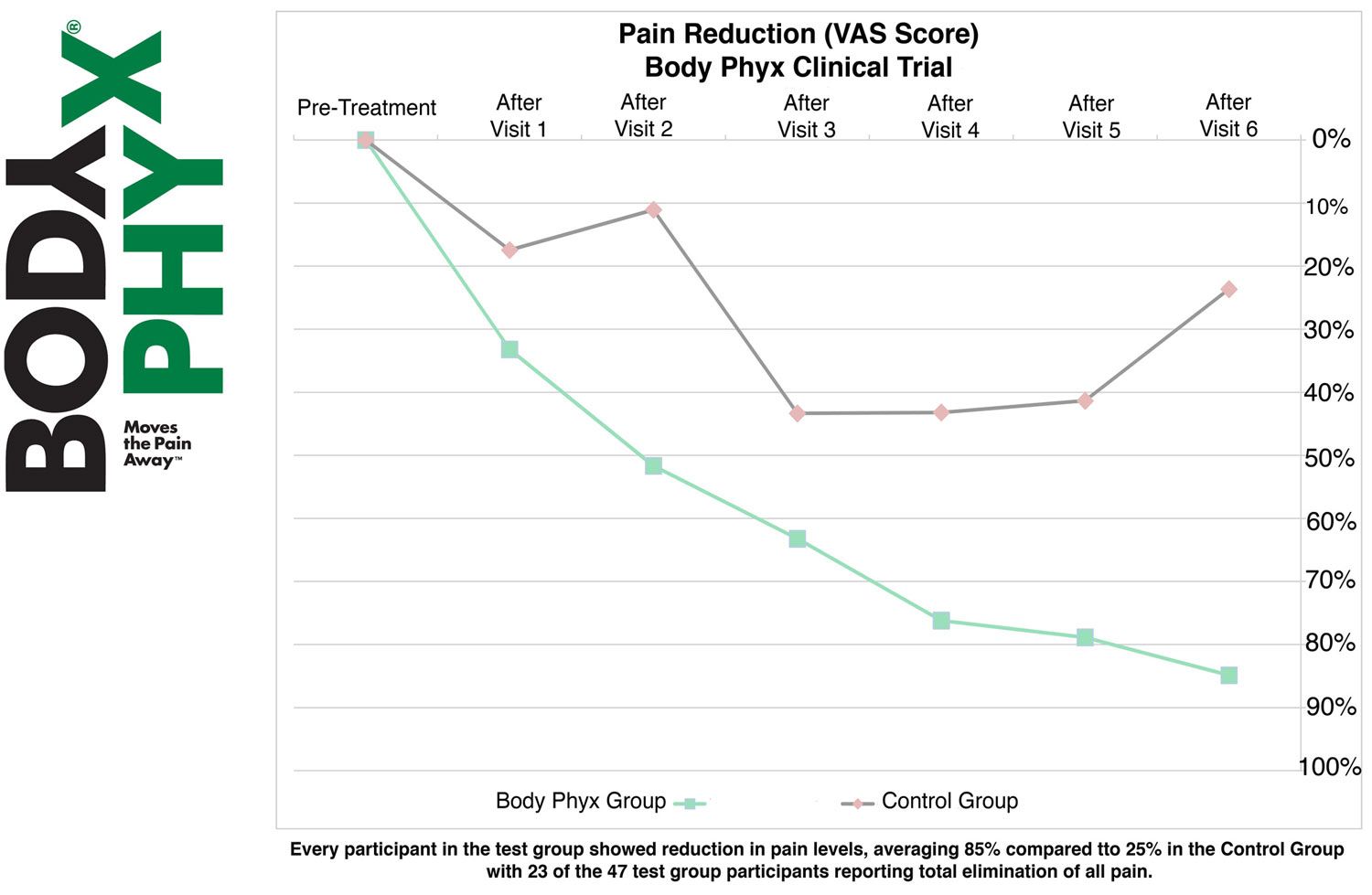
Nerve mobilization successfully resulted in a statistically significant increase in neural movement and a decrease in shoulder pain. Using a prospective randomized controlled design with 98 subjects, proven measurements, Elvey’s (Upper Limb Tension Test), Maitland Slump Test (proximal neural movement at the spine), and the VAS (Visual Analog Pain Scale) were used. Measurements following treatments of automated nerve mobilization/Body Phyx demonstrated that there was a change with resultant increase in nerve movement (demonstrating an increase in the median nerve glide) and a decrease on the pain scale. A series of t-tests were run to determine significant mean differences in pain and range of motion outcomes between treatment and control groups. When compared to a control group (n=44) who received standard physical therapy there was a statistically significant mean difference with less pain in the treatment group (n=54, mean treatment pain score—I .81 , mean control pain score=4.38, p<.0001 There was also significantly greater range of motion for the treatment group with respect to supination (mean treatment score=150.13 vs. mean control score—121.68, p = .006), wrist extension (mean treatment score=75.98 vs. mean control score=61.30, p = .004) and shoulder depression (mean treatment score=4.23 vs. mean control score=3.23, p = .02). Therapy with the nerve mobilizer/Body Phyx was highly successful.
* Do not site without author’s/researcher’s permission.